What’s the article about? This article discusses which upgrades you should make first when shifting from manual welding to automation. It also discusses the welding fixtures and equipment required for operator skills and safety.
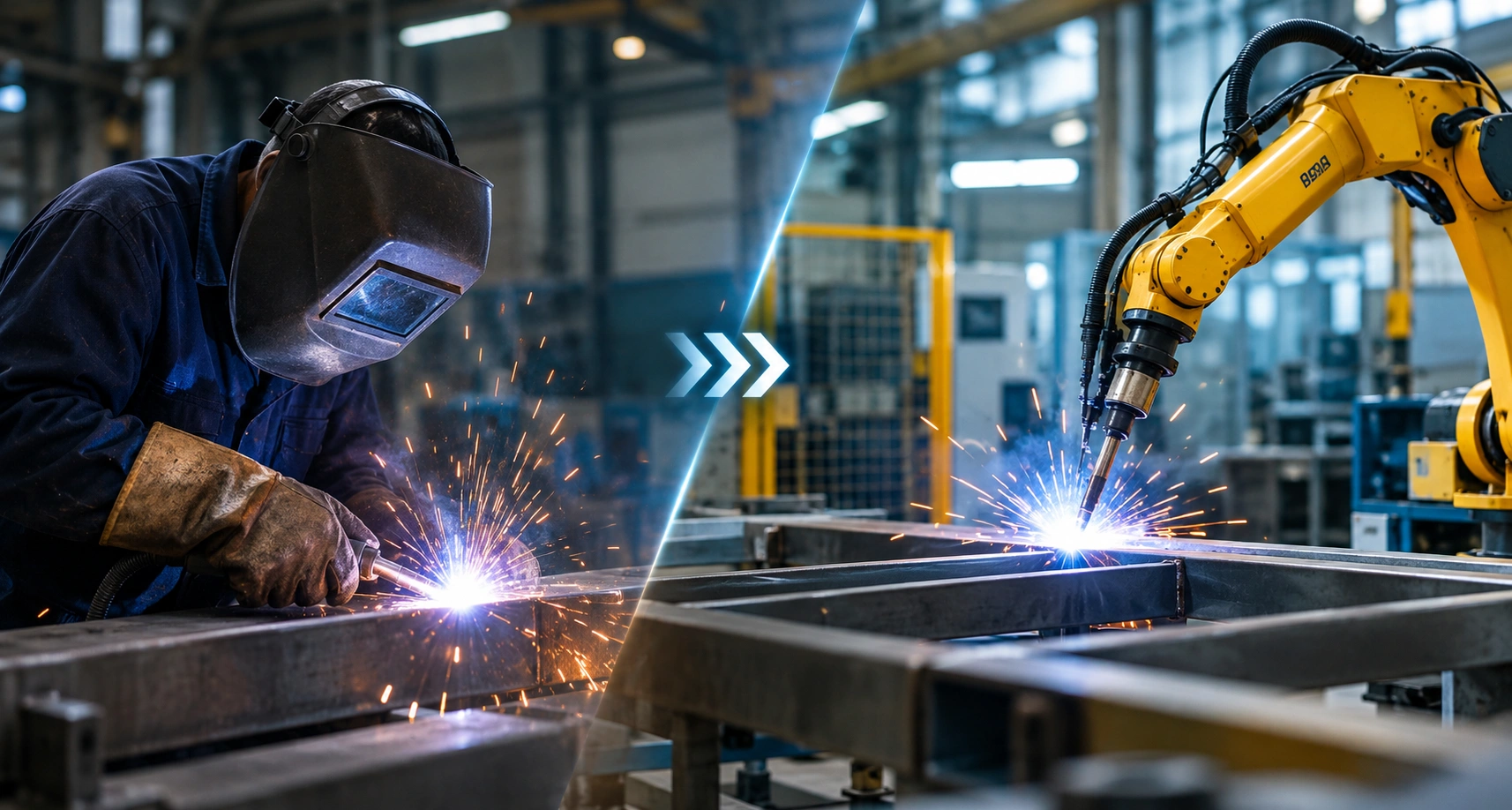
Moving from manual welding to automation can boost productivity, consistency, and output. But does this mean that you should immediately invest in robotic welding equipment? Not really.
Many manufacturers still believe that improving the existing welding process is the best first step. Upgrading fixtures, modularising workpieces, and improving safety can lay a solid foundation for automation while avoiding unnecessary costs. But how to do that?
1. Start With Welding Fixtures
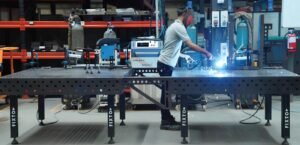
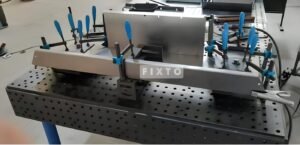
Welding fixtures should be one of the first upgrades to make. They keep components in the proper position during welding, thereby maintaining alignment and reducing movement. Operators in manual welding may compensate for poorly positioned parts. Automated systems require more accurate positioning to produce consistent results.
Therefore, manufacturers should decide whether their current fixtures provide adequate rigidity, repeatability, and access for welding equipment. Dedicated fixtures, modular systems, or Fixto’s custom welding fixtures may be relevant for your production needs.
2. Standardise Components and Welding Procedures
Automation works best for processes that are predictable. Weld quality is affected by differences in component dimensions, joint gaps, and assembly positioning.
So before investing in automation, you must prepare clear welding procedures, state component preparation, and define acceptable quality levels. Consistent inputs make it easier to program equipment and detect issues during production.
3. Evaluate Your Welding Equipment
Check that your current welding machines meet your production needs. Welding current, duty cycle, wire feeding, and compatibility with automation equipment can all have an impact on the subsequent upgrade.
You may not need to replace all machines right away. In some cases, upgrading specific equipment or installing compatible systems with Fixto can help prepare your workshop for future automation.
4. Improve Safety and Workspace Layout
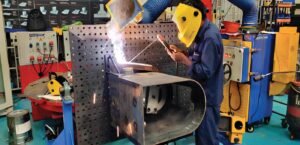
Automation requires a deep review for operator safety. Examine welding fumes, electrical hazards, safety equipment, machine guarding, and access to the welding area.
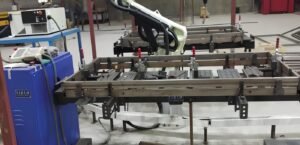
Robotic welding equipment may also require safety fencing, interlocks, emergency stops, and proper access controls. A well-organised workspace reduces unnecessary movement and makes it easier to incorporate new equipment.
5. Choose the Right Level of Automation
Not all manufacturers require a fully automated production line.
- Manual welding improvements are suitable for low production volumes or frequently changing components.
- Semi-automated welding is useful when certain repetitive tasks can be automated while operators maintain control of other activities.
- Robotic welding is worth considering for repetitive jobs with predictable components and a large production demand.
Begin with a process that results in frequent delays, quality issues, or production bottlenecks.
6. Train Operators and Measure Results
Automation alters job responsibilities rather than removing the need for skilled labour. Employees may require training on machine operation, programming, inspection, and troubleshooting.
Before implementation, keep track of basic metrics such as production time, rejection rates, rework, and downtime. Compare these results after the upgrade to decide whether the investment has delivered value.
Conclusion
The transition from manual welding to automation should begin with improvements in already existing processes. Better fixtures, consistent components, proper tools and safety precautions are important for a solid foundation for automation.
Therefore, upgrade gradually, monitor the results, and expand when production demands justify the investment.
FAQs
- What should manufacturers upgrade first to enable welding automation?
Begin by analysing welding fixtures, component consistency, and current process limitations.
- Is robotic welding suitable for small manufacturers?
It is possible, but the decision should be based on production volume, component variety, labour, and investment costs.
- Why are welding fixtures necessary for automation?
They hold components in consistent positions, allowing automated equipment to produce repeatable welds.
- Do manufacturers require new welding machines for automation?
Not always. Existing equipment may be suitable if it meets the technical and integration specs.
- How can manufacturers measure automation success?
Monitor production time, weld rejection rates, rework, downtime, and overall output before and after implementation.