What’s the article about? This guide explains everything a manufacturer needs to know about workholding. How it provides stability and repeatability, which are required for precise outcomes.
In manufacturing, it is important to consider not only the accuracy of the workpiece but also its condition, positioning, and operation; everything contributes. Workholding refers to the methods and devices used to locate, support, and secure a workpiece during activities such as machining, welding, assembly, inspection, or other manufacturing processes.
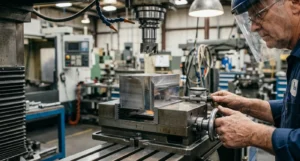
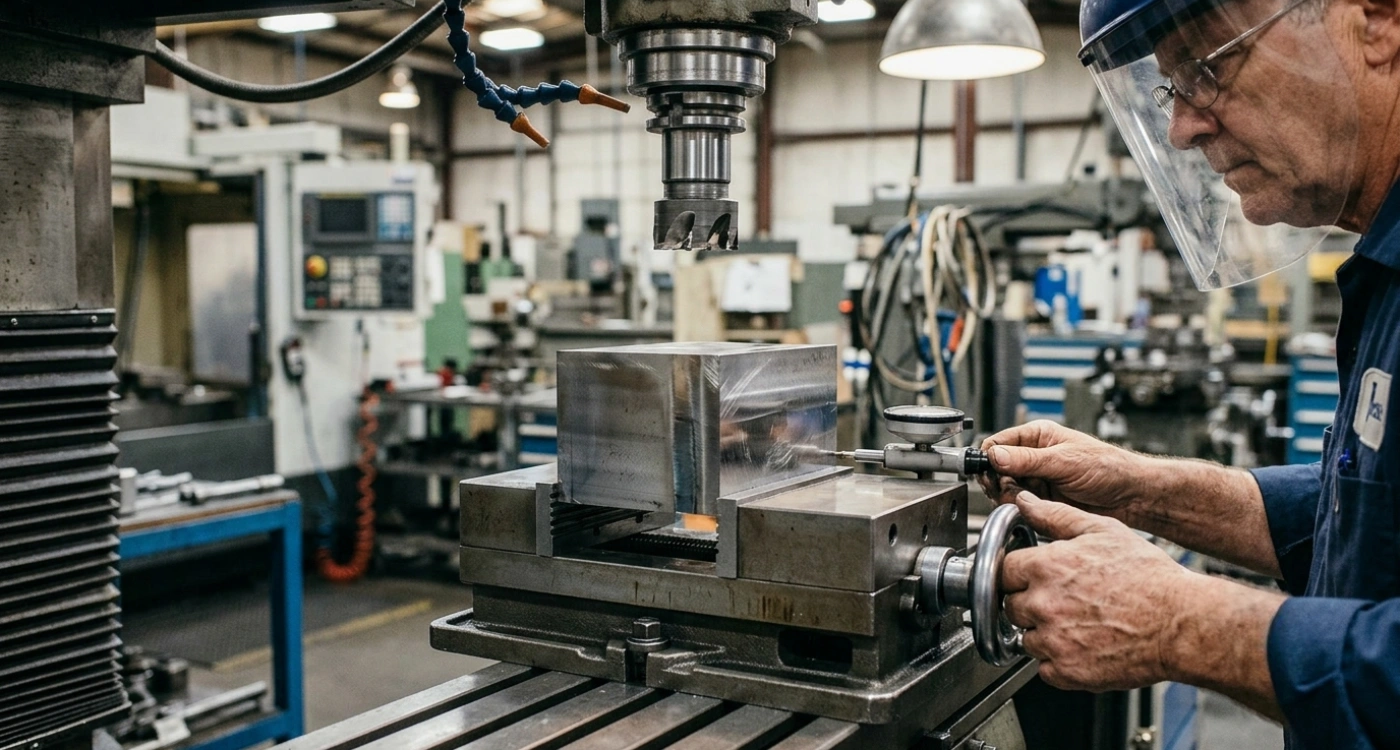
In simple terms, it is the system that keeps a component stable during manufacturing operations. A well-designed setup prevents unwanted movements and vibrations while also allowing the machine or operator to access the required surfaces. In practice, workholding devices may include vises, chucks, clamps, jigs, fixtures, locators, and specialised tooling. Their selection is made by the component geometry, operation, production volume, and accuracy requirements.
Why Are Workholding Fixtures Important?
Fixto’s workholding fixtures help to set up repeatable positioning from one production cycle to the next. This thing is particularly important in a CNC machine, where even small changes in a workpiece can affect dimensional accuracy and the overall finish.
Generally, a proper fixture must be good at three fundamental functions:
- Position the component accurately.
- Support the component against operational forces.
- Clamp the component securely.
As a result, proper workholding can help manufacturers improve repeatability and dimensional consistency. It can also reduce setup and changeover times, as well as vibration and workpiece movement. It can also reduce operator-dependent positioning errors, resulting in safer and more efficient production.
What Are the Different Types of Workholding?
This depends entirely on the manufacturing process and the component requirements. Let’s refer to the table for a clear understanding:
| WORKHOLDING TYPE | COMMON APPLICATION |
| Vises and chucks | CNC machining and turning |
| Clamping fixtures | Milling, drilling and machining |
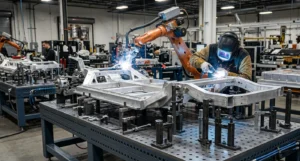
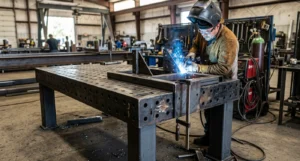
| Welding fixtures | Fabrication and welded assemblies |
| Hydraulic/pneumatic fixtures | Automated or high-volume production |
| Modular fixtures | Variable components and flexible production |
| Inspection fixtures | Dimensional checking and quality control |
CNC, VMC, and HMC are some of the fixtures commonly used by Indian manufacturers, in addition to hydraulic and mechanical clamping systems.
How to Choose the Right Workholding Solution?
To start, begin with the component drawing and decide on the machine configuration. Keep geometry, machining process, cutting forces, tolerances, and production volume in mind. Hydraulic or pneumatic clamping may improve cycle consistency in high-volume or automated production, but modular workholding is more appropriate in areas where component variations are common.
Lastly, effective industrial workholding is more than just holding on to the workpiece tightly. It is about developing a stable, repeatable, accessible, and production-ready setup that can support the necessary quality and productivity.
Need Reliable Workholding for your Manufacturing Process? Explore Fixto’s precision-engineered workholding fixtures and modular solutions, which are designed for accurate, repeatable, and efficient production.
FAQs
- What does workholding mean in manufacturing?
Workholding is the use of tools like fixtures, clamps, vises, and chucks to position and secure a workpiece during manufacturing. - What are workholding fixtures used for?
They keep components in a consistent position, enhancing machining accuracy, stability, safety, and production consistency. - What is the definition of CNC workholding?
CNC workholding refers to the fixtures, vises, chucks, and clamping systems that are used to secure workpieces during CNC machining. - What is the distinction between a jig and a fixture?
A jig supports and guides a workpiece or tool. On the other hand, a fixture locates and secures the workpiece during an operation. - How do I select the appropriate workholding solution?
Look for the component’s geometry, material, machining process, tolerances, production volume, cutting forces, and machine configuration.