What’s the article about? This article explains how modular welding tables help Indian manufacturers manage changing production requirements, simplify fixture setups, and improve welding consistency.
High-mix production requires manufacturers to handle a variety of components, designs, and batch sizes under tight deadlines. Modular welding tables are a practical way to increase welding operations’ flexibility, repeatability, and efficiency. Indian manufacturers are increasingly dealing with complex customer requirements, smaller production batches, and frequent design changes. This is common in auto parts, fabrication, agricultural equipment, and industrial machinery.
High-mix production enables businesses to serve multiple markets, but it also presents the challenge of how manufacturers can switch between jobs without having to rebuild their welding setup each time.
Why Do Traditional Welding Setups Slow Production
A simple answer to this is that although dedicated fixtures are perfect for stable, high-volume production, component designs change frequently. In this case, manufacturers may need more fixtures, storage space, and setup time. Here, a modular approach provides more flexibility.
What is a Modular Welding Table
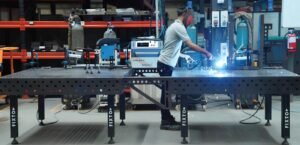
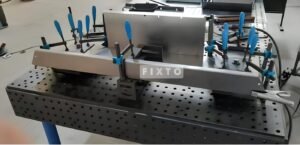
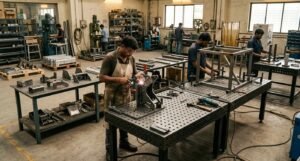
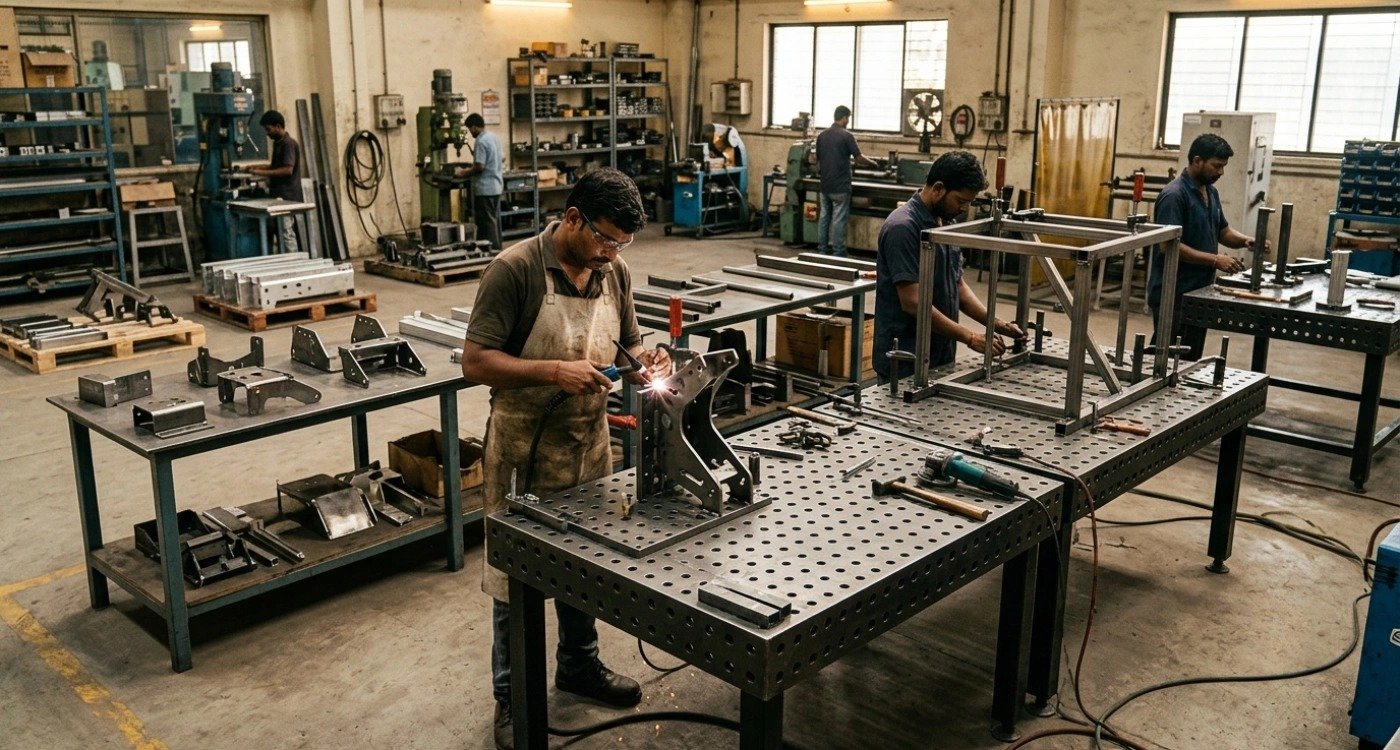
A modular welding table is a work surface with pre-defined holes or slots that allow operators to position clamps, stops, supports, and other fixture components as needed.
Flexible Fixture Setups
Instead of creating a new fixture for each component, operators can rearrange compatible accessories easily to suit various tasks.
Faster Production Changeover
Modular settings can reduce the need for repetitive fabrication and modification of dedicated fixtures. This allows teams to move between product variants more efficiently.
Consistent Component Positioning
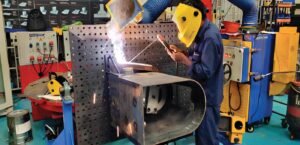
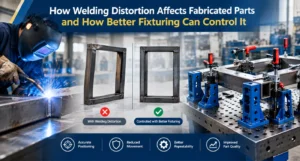
Accurate locating points and secure clamping help to keep elements in place while welding. This is really useful for creating multiple versions of a bracket, frame, or assembly.
Lower Fixture Development Costs
Reusable tooling can reduce the need to create unique fixtures for each production variant. Actual savings vary according to product complexity, changeover frequency, and tooling requirements.
Improved Workshop Space Utilisation
Modular accessories can be organised and reused across compatible jobs, eliminating the need to store multiple dedicated fixtures.
Easier Integration with Automation
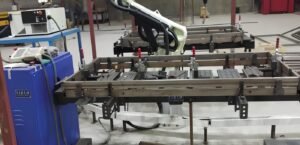
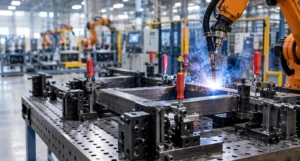
Modular tables can fit robotic welding and automated welding fixtures if the table, tooling, robot reach, and safety requirements are compatible.
Increased Production Flexibility
Manufacturers can adjust setups as customer specifications change, making modular systems useful for prototyping, job-shop fabrication, and mixed-batch manufacturing.
How to Choose the Right Welding Table
Here’s how you can choose the right Fixto welding fixtures for the table:
Consider Hole Patterns and Accuracy
Select a table with the proper hole diameter, spacing, surface flatness, and repeatable positioning system. These specifications affect fixture compatibility and assembly accuracy.
Check Load Capacity
The table must be capable of safely supporting the workpiece, clamps, and tooling. Heavy fabrication applications may require a more durable design.
Evaluate Customisation Options
Before recommending a configuration, a reputable welding fixture manufacturer in India should first understand your components, tolerances, production volumes, and future needs.
Can Modular Tables Work With Custom Welding Fixtures
Yes, custom welding fixtures for manufacturing can be designed around recurring components, whereas modular tooling accommodates product variations. This hybrid approach strikes a balance between repeatability and flexibility.
The best welding fixtures can be found at Fixto Welding, where manufacturers can evaluate welding tables and fixture needs.
FAQs
- Are modular welding tables suitable for smaller manufacturers?
Yes, modular tables help small manufacturers reuse tooling across multiple jobs and reduce their dependency on dedicated fixtures.
- Can modular tables increase welding accuracy?
Yes, they support consistent positioning seamlessly if the table, locating components, and clamping arrangement meet the necessary requirements.
- Are modular welding tables relevant for robot welding?
Well, if the table and fixtures are designed to accommodate the robot’s positioning, access, and safety needs, then it’s safe to use for robotic purposes.
- Do modular tables replace custom fixtures?
No, complex or high-volume components may still require highly specialised custom fixture designs.
- How do manufacturers choose the right table?
Consider component size, weight, required accuracy, production mix, hole pattern, and compatibility with current equipment.