What’s the article about? This article discusses what causes welding distortion, how it affects fabricated parts, and how better fixturing, clamps, and welding techniques can assist Indian manufacturers in controlling it.
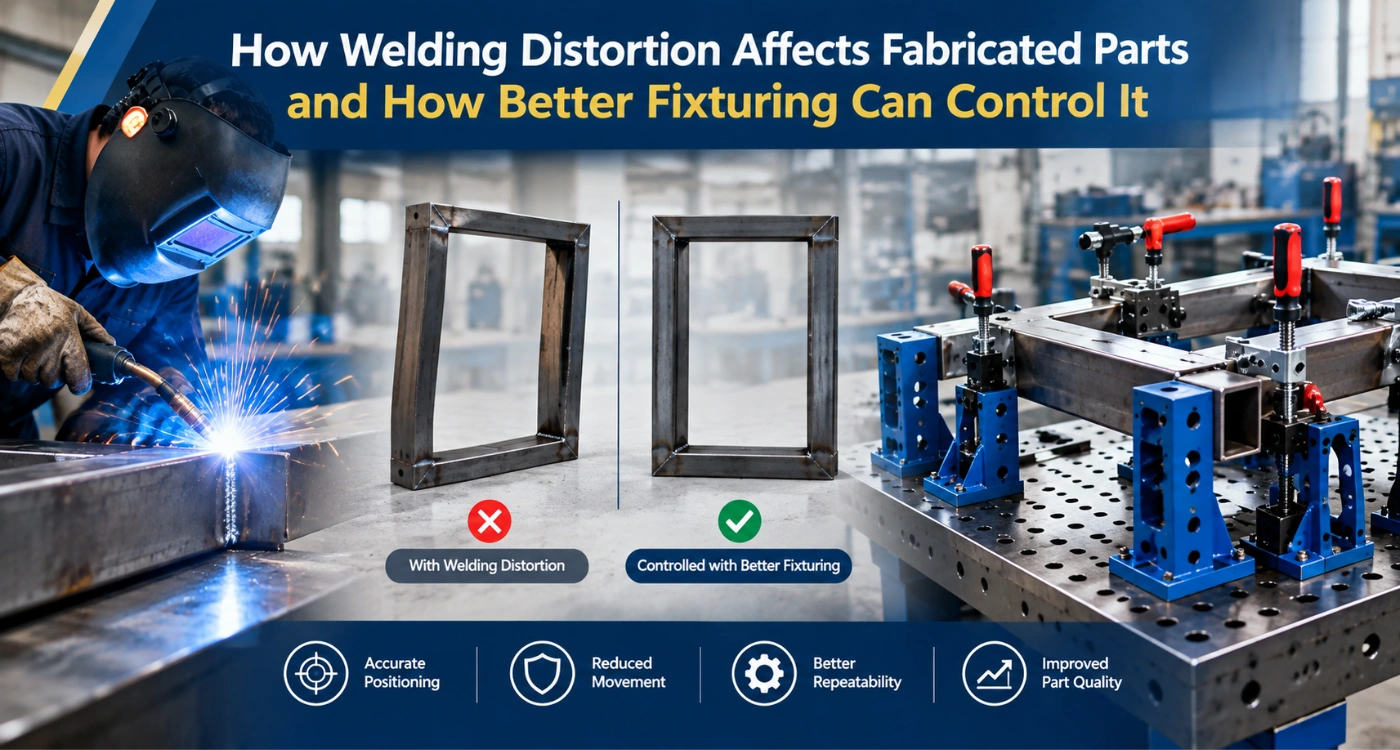
You may be familiar with a distorted welded piece, but many others who are new to welding may not be! So, welding distortion is a common issue in fabricated components. It occurs when welding heats up a specific area; the metal expands and then contracts as it cools. The uneven heating and contraction cause components to shift out of sync, affecting dimensions, appearance, and the overall fit.
For Indian fabricators who work with both easy and complex structural assemblies, effective welding distortion control begins with understanding how heat and fixturing interact.
What Causes Welding Distortion?
Welding distortion occurs when the weld metal and the associated base material expand and contract during the welding process. The amount of distortion is calculated by heat input, joint design, material thickness, weld size, restrictions, and overall welding process.
A few common examples of distortion are angular deformation and longitudinal contraction. Even minor dimensional variations can cause problems when fabricated parts are to be fit precisely.
How Does Distortion Affect Fabricated Parts?
There are many instances, but some of the most common things that can cause distortion are as follows:
- Dimensional inaccuracies and uneven fittings
- Misalignment of components
- Difficult assembly or machining
- Increased rework and material waste
- Inconsistent results across batches
Therefore, controlling movement during welding is a production and quality issue for manufacturers working to tight deadlines, rather than an aesthetic one.
How Can Better Fixturing Control Welding Distortion?
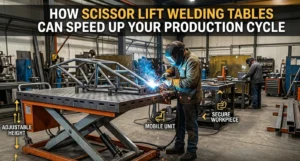
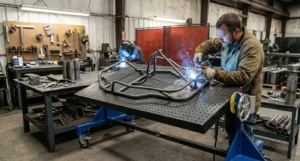
The objective of fixturing is to position components accurately and provide controlled limitation during welding. Strong and properly positioned fixtures can help to keep the piece in place. Fixto’s welding fixture table simplifies this process by providing a stable and repeatable work surface with multiple positioning points. Fabricators only need to hold parts in place with stops, locators, squares, and clamps.
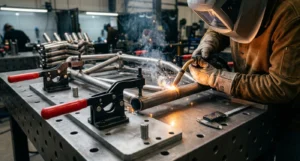
Even in this, welding table clamps play a very important role. Proper clamping keeps components seated against reference points while reducing movement caused by distortion. However, excessive restrictions can cause residual stress. Therefore, fixture design and welding sequence must be considered together.
Can Modular Welding Fixtures Improve Repeatability?
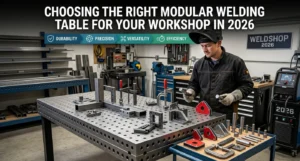
Of course! Modular welding fixtures provide more flexibility than dedicated tooling for manufacturers. Clamps and locating accessories can be repositioned to create new specifications without creating a completely new fixture.
Fixto Welding’s modular system also simplifies positioning for repeat jobs by providing modular workholding options that can be configured to meet every kind of fabrication requirement.
Are There Any Other Methods to Reduce Distortion?
While fixturing is just one aspect of welding distortion control, manufacturers should also review the following:
- Welding sequence and direction
- Joint design and fit-up
- Weld size and heat input
- Material and thickness
- Tack-welding strategy
- Balanced welding where practical
A planned welding sequence can reduce uneven deformation, and proper heat control can limit distortion.
Final thoughts
Better fixturing will not eliminate welding distortion entirely, but it can drastically improve part movement and repeatability. The combination of suitable welding fixture tables, selected clamps, sound fixture design, and a controlled welding process can provide you with a more reliable method of producing accurate fabricated parts.
Are you ready to reduce rework and improve welding accuracy? Contact Fixto today to find the right modular fixturing solution.
FAQs
- What causes weld distortion?
The most common cause is uneven heating and cooling during welding. It causes metal to repeatedly expand and contract, resulting in distortion. - How is welding distortion controlled?
With proper fixturing, welding sequence, heat control, and accurate fit-up, your distorted weld can be contained. - How can welding fixture tables help?
Fixto’s welding fixtures hold components safely and make sure that you get precise positioning during welding. - Why are welding table clamps necessary?
They help to prevent unwanted movement and keep components aligned while welding. - Do modular welding fixtures reduce rework?
Yes, they can improve positioning consistency and reduce alignment errors.