What’s the article about? Discover the key signs your welding fixtures need replacement and learn how modular welding tables improve weld quality, reduce setup time, and increase manufacturing efficiency in modern fabrication.
It’s already known to us that welding fixtures are necessary for maintaining accuracy, repeatability, and productivity in manufacturing. Reliable fixtures will forever ensure that every component is positioned correctly before the process begins. Doesn’t matter if it’s fabricating automotive parts, heavy machinery, structural steel, or industrial equipment. However, like any other machinery, welding fixtures, too, wear out and need to be replaced within a timeframe.
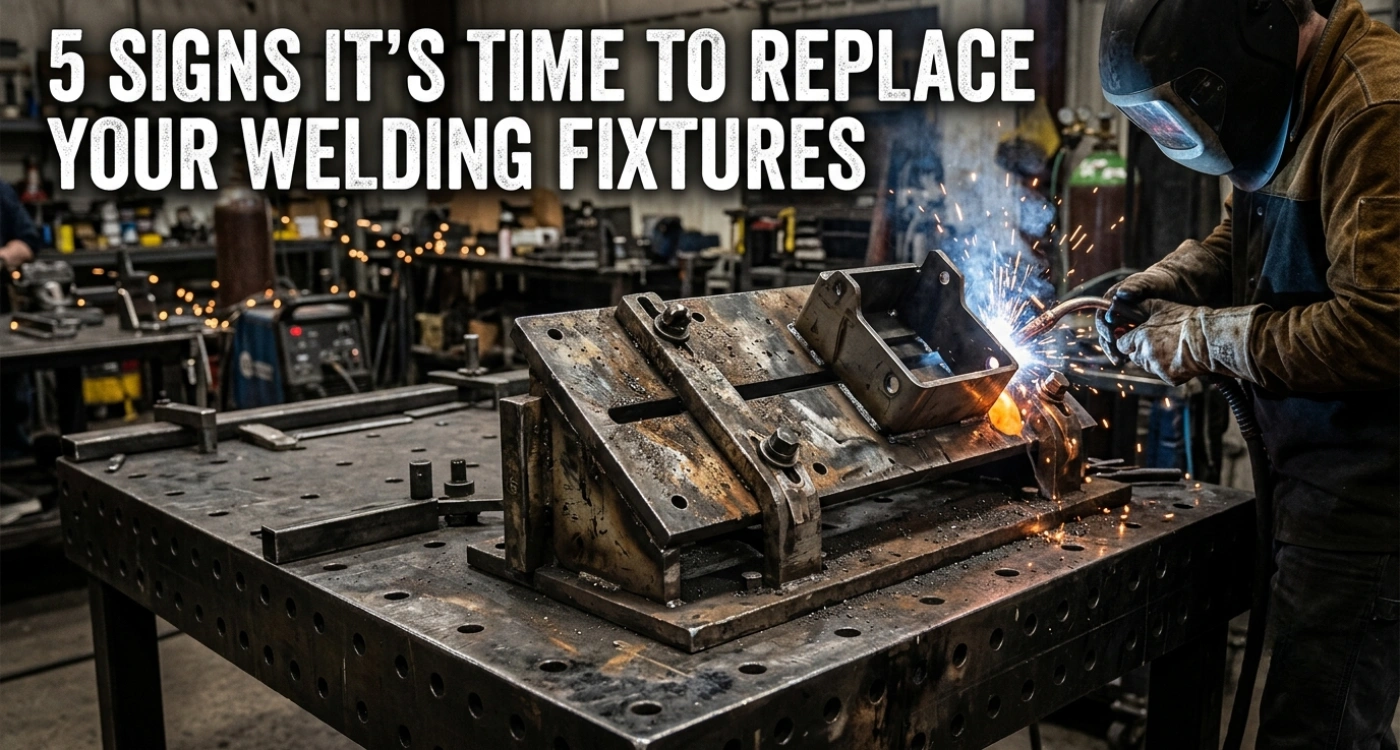
Therefore, here are 5 clear signs that indicate your welding fixtures may need to be replaced.
1. Inconsistent Part Positioning
If your fixture is getting inconsistent while positioning, this is the first sign that you need to replace it immediately. Once you feel that you are struggling to achieve repeatable alignment, this can result in dimensional inaccuracies, poor weld consistency, increased inspection failures, and higher rework rates.
Replacing worn welding fixtures with a calibrated workholding system helps restore positioning accuracy and increases overall production quality.
2. Setup Time Keeps Increasing
If production teams spend lots of time adjusting clamps and locating pins rather than welding, your fixture is actually reducing productivity instead of increasing it. Traditional fixed fixtures often become difficult to modify as production requirements change. A modular welding table allows for faster fixture adjustments, resulting in shorter shifts and less machine downtime.
For manufacturers who handle multiple product variants, reducing setup time directly improves manufacturing efficiency.
3. Frequent Repairs and Maintenance
Small repairs may appear cost-effective at first, but repeated maintenance frequently denotes that the fixture has reached the end of its service life. Worn locating pins, bent fixture components, loose clamps, and damaged mounting surfaces are all common warning signs.
Instead of repeatedly repairing worn-out fixtures, investing in a replacement can improve dependability and reduce long-term maintenance costs.
4. Product Designs Have Changed
Manufacturing requirements change over time. New product designs, customer requirements, and shorter production runs require more flexibility than traditional fixtures can provide. If every design change demands considerable fixture modifications or entirely new tooling, it may be time to upgrade.
A modular fixture system allows you to support multiple component sizes and configurations without having to build separate fixtures for each project.
5. Weld Quality Is Declining
Poor weld quality is not always the result of welding parameters. In many cases, the root cause is incorrect workholding. A worn fixture can cause parts to shift during welding, resulting in misalignment, uneven gaps, poor weld penetration, and excess scrap.
Replacing outdated fixtures ensures repeatable positioning and consistent weld quality across each production batch.
How to Choose the Right Welding Fixture Replacement?
Before you replace your fixture, consider the factors, including production volume and component variety, fixture accuracy and rigidity, compatibility with modular accessories, convenience of reconfiguration, and long-term maintenance requirements.
In short, working with an experienced manufacturer such as Fixto will help ensure your investment will meet today’s production needs and tomorrow’s requirements.
Final Thoughts
Worn fixtures can invisibly eat productivity, increase rework and reduce weld quality. By taking note of the warning signs early, manufacturers can take corrective action before problems take a toll on production schedules and profitability.
Therefore, for companies looking to improve manufacturing efficiency, replacing welding fixtures or transitioning to a modular welding table is an affordable step toward more flexible, accurate and reliable welding operations.
FAQs
- When should you replace a weld fixture?
Replace a welding fixture that causes misalignment, long setup times, or inconsistent weld quality. - What are the signs of a worn welding fixture?
Poor positioning, frequent repairs, longer setup times, and declining weld quality are all common signs. - Why are modular welding tables replacing fixed fixtures?
They provide faster setup, increased flexibility, and lower tooling costs. - How do welding fixtures increase manufacturing efficiency?
They ensure precise part positioning, minimise rework, and accelerate production. - What factors should you consider when replacing a welding fixture?
Evaluate production volume, fixture accuracy, flexibility, and future manufacturing requirements.